
The Industrial Maintenance Importance: Ensuring Operational Excellence

Industrial maintenance importance cannot be overstated in the context of modern industrial operations. It is a critical component that underpins the reliability, safety, and efficiency of machinery and infrastructure. From the perspective of a professional deeply engaged in this sector, I have observed that the meticulous upkeep of industrial equipment is not merely a routine task but a strategic imperative. The consequences of neglecting maintenance are far-reaching, affecting productivity, safety, and ultimately, the bottom line. This article explores the multifaceted significance of industrial maintenance, providing detailed insights and practical recommendations to optimize maintenance practices.
Understanding the Industrial Maintenance Importance
The essence of industrial maintenance lies in its ability to preserve the functionality and extend the lifespan of equipment. In industrial settings, machinery operates under strenuous conditions, often continuously and at high capacities. Without regular maintenance, wear and tear accelerate, leading to unexpected breakdowns and costly repairs. The industrial maintenance importance is reflected in its role in preventing such disruptions, thereby ensuring uninterrupted production processes.
Maintenance activities encompass a broad spectrum, including preventive, predictive, and corrective measures. Preventive maintenance involves scheduled inspections and servicing to forestall failures. Predictive maintenance leverages data and analytics to anticipate issues before they manifest. Corrective maintenance addresses problems post-failure but aims to restore equipment promptly. Each approach contributes uniquely to operational stability and efficiency.

Close-up view of industrial machinery components undergoing maintenance
The Economic and Safety Implications of Industrial Maintenance
The economic rationale for prioritizing industrial maintenance is compelling. Unplanned downtime can result in significant financial losses due to halted production, missed deadlines, and emergency repair costs. Moreover, poorly maintained equipment tends to consume more energy and materials, thereby increasing operational expenses. By contrast, a well-structured maintenance program enhances asset utilization and reduces total cost of ownership.
Safety considerations further amplify the industrial maintenance importance. Industrial environments are inherently hazardous, with heavy machinery, high voltages, and complex processes. Equipment failures can precipitate accidents, endangering personnel and causing environmental harm. Regular maintenance ensures that safety systems function correctly and that machinery operates within prescribed parameters, thereby mitigating risks.
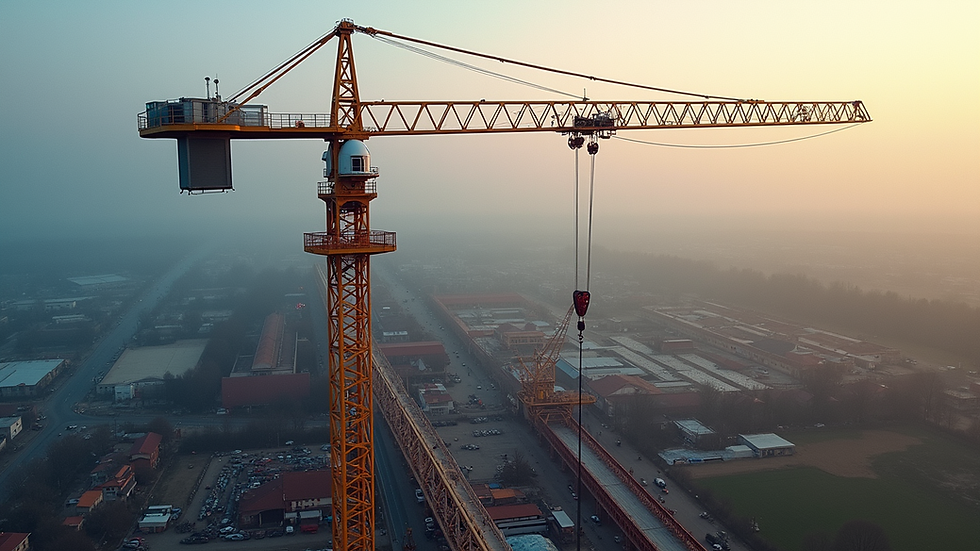
To illustrate, consider a crane used in construction and lifting operations. If its mechanical components are not routinely inspected and serviced, the risk of malfunction during critical lifts escalates. Such incidents can lead to severe injuries, property damage, and legal liabilities. Therefore, maintenance is integral to safeguarding human life and maintaining regulatory compliance.
Strategies for Effective Industrial Maintenance
Implementing an effective industrial maintenance program requires a strategic approach that integrates technology, skilled personnel, and robust processes. The following strategies are essential:
Comprehensive Asset Management: Maintain detailed records of all equipment, including specifications, maintenance history, and performance data. This facilitates informed decision-making and prioritization.
Scheduled Preventive Maintenance: Develop and adhere to maintenance schedules based on manufacturer recommendations and operational demands. This reduces the likelihood of unexpected failures.
Condition Monitoring and Predictive Analytics: Utilize sensors and diagnostic tools to monitor equipment health in real-time. Predictive analytics can forecast potential issues, enabling proactive interventions.
Training and Skill Development: Ensure maintenance personnel are well-trained and updated on the latest technologies and best practices. Skilled technicians are crucial for accurate diagnostics and effective repairs.
Continuous Improvement: Regularly review maintenance outcomes and processes to identify areas for enhancement. Incorporate feedback and lessons learned to refine maintenance strategies.

High angle view of technician performing diagnostic checks on industrial equipment
The Role of Industrial Maintenance in Project Success
In the context of large-scale projects, particularly those involving lifting and construction, industrial maintenance assumes a pivotal role. Equipment reliability directly influences project timelines and quality. Delays caused by equipment failure can cascade, affecting multiple phases of a project and inflating costs.
Premier Crane Services exemplifies the integration of comprehensive maintenance within project execution. By ensuring that cranes and related machinery are meticulously maintained, the company guarantees that lifting operations proceed safely and efficiently. This commitment to maintenance excellence supports the broader business goal of being the leading and most reliable partner across British Columbia.
Moreover, industrial maintenance importance extends to environmental stewardship. Properly maintained equipment operates more efficiently, reducing emissions and waste. This aligns with contemporary sustainability objectives and regulatory requirements, further underscoring the strategic value of maintenance.
Advancing Industrial Maintenance Through Innovation
The future of industrial maintenance is being shaped by technological advancements that enhance precision and efficiency. The adoption of the Industrial Internet of Things (IIoT), artificial intelligence, and machine learning is revolutionizing maintenance practices. These technologies enable continuous monitoring, automated diagnostics, and optimized maintenance scheduling.
For instance, IIoT sensors embedded in machinery transmit real-time data to centralized systems, allowing for immediate detection of anomalies. AI algorithms analyze this data to predict failures and recommend maintenance actions. This shift from reactive to proactive maintenance maximizes equipment uptime and resource utilization.
In addition, digital twins—virtual replicas of physical assets—allow for simulation and testing of maintenance scenarios without disrupting actual operations. Such innovations empower maintenance teams to make data-driven decisions, enhancing reliability and safety.
The integration of these technologies is particularly beneficial in regions like British Columbia, where diverse industrial activities demand adaptable and resilient maintenance solutions. Embracing innovation ensures that maintenance practices remain aligned with evolving operational challenges and business objectives.
Sustaining Industrial Excellence Through Maintenance
The industrial maintenance importance is a cornerstone of operational excellence. It is a discipline that demands foresight, precision, and unwavering commitment. By investing in comprehensive maintenance programs, organizations safeguard their assets, protect their workforce, and enhance their competitive edge.
In my experience, the most successful industrial operations are those that recognize maintenance not as a cost center but as a strategic enabler. The continuous cycle of inspection, repair, and improvement fosters resilience and adaptability, qualities essential in today’s dynamic industrial landscape.
For those seeking to elevate their maintenance practices, collaboration with experienced partners such as Premier Crane Services offers invaluable benefits. Their expertise in lifting, maintenance, and construction support ensures that projects across British Columbia are executed with the highest standards of safety and efficiency.
Ultimately, the pursuit of industrial maintenance excellence is a journey—one that demands diligence, innovation, and a steadfast focus on quality. It is through this journey that industrial operations achieve sustained success and contribute meaningfully to the economic vitality of their communities.


Comments